Aircon Gas Top-Up in the Philippines: Do You Actually Need One?
By the NJ Aircon Services Team · April 24, 2026 · 7 min read
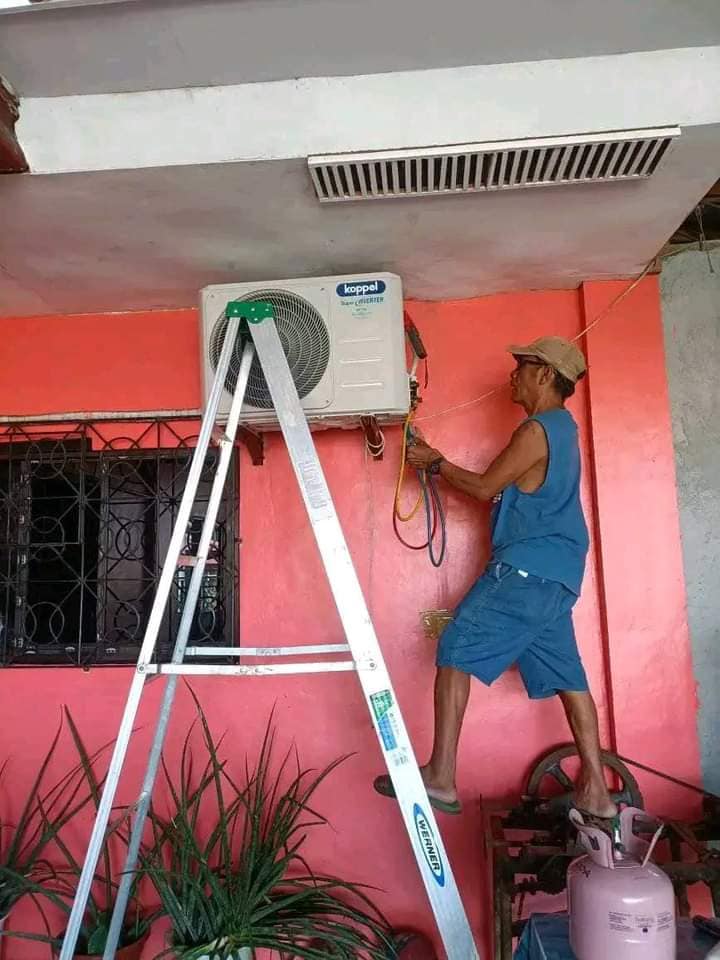
If your aircon isn't blowing cold air the way it used to, chances are someone has already told you: “Kulang na yung gas, i-top up mo na.”
Sometimes they're right. But more often than not — especially in the Philippines where aircon cleaning is frequently skipped — the real problem is a dirty unit, not low refrigerant. Understanding the difference can save you thousands of pesos and prevent you from paying for a service you don't actually need.
Here's everything you need to know about aircon gas top-ups in Sarangani Province and General Santos City.
What Is Aircon “Gas” and Why Does It Matter?
The “gas” in your aircon isn't actually gas in the way we normally think of it. It's refrigerant — a chemical substance (most commonly R-22 or R-410A in Philippine residential units) that cycles between liquid and gas states inside your aircon to absorb heat from your room and release it outside.
Without the correct amount of refrigerant, your aircon physically cannot produce cold air. The compressor runs, the fan blows, but the cooling effect is minimal or completely absent.
The most important thing to understand: refrigerant does not get used up during normal operation. Your aircon does not “consume” refrigerant the way a car consumes fuel. If your refrigerant level is low, it means one thing — there is a leak somewhere in the system.
Signs Your Aircon Might Have Low Refrigerant
The unit cools for a short time, then stops.
If your aircon cools well for the first 10–15 minutes and then gradually stops, this can indicate the refrigerant is running low as the system cycles.
Ice forms on the copper pipes or indoor unit.
When refrigerant pressure drops too low, the evaporator coil gets too cold and moisture in the air freezes on it. You may notice ice on the copper pipes running between your indoor and outdoor unit.
Outdoor unit is running but there's very little cooling.
If the compressor is clearly running — you can hear it and feel the heat from the outdoor unit — but the indoor unit is barely cooling, refrigerant level is a likely cause.
Still not cold after a professional cleaning.
If a thorough cleaning didn't restore your unit's cooling performance, the next step is a refrigerant check. Low refrigerant is one of the few cooling problems that cleaning cannot fix.
If your unit hasn't been cleaned recently, a professional aircon cleaning should always be the first step before considering a refrigerant top-up.
Signs That Look Like Low Refrigerant — But Aren't
Many cooling problems are misdiagnosed as needing a gas top-up when the real cause is something else entirely. In our experience servicing units across Sarangani Province and General Santos City, the majority of aircons we're called out for “no cooling” turn out to need cleaning, not refrigerant.
A dirty filter or coil.
A heavily clogged filter or dirty evaporator coil restricts airflow and reduces cooling dramatically — sometimes to the point where the unit barely cools at all. This is the number one cause of poor cooling performance in the Philippines. Before spending money on refrigerant, always try cleaning first.
A blocked outdoor condenser unit.
If the outdoor unit is obstructed — by a wall too close, overgrown plants, or stored items — it cannot release heat effectively. The unit runs but the room doesn't cool. This isn't a gas problem.
An undersized unit for the room.
A 0.75HP aircon cannot effectively cool a 30 sqm room no matter how much refrigerant it has. If your unit has always struggled to cool the room, refrigerant isn't the issue.
A failing compressor.
If the compressor is worn out or failing, topping up the refrigerant won't help and may actually accelerate the damage.
The Right Process: Check Before You Top Up
A responsible aircon technician will never top up your refrigerant without doing two things first.
Step 1 — Diagnose the actual cause.
A technician should first clean the unit or verify it has been recently cleaned, check for obvious blockages, and confirm that cooling performance is still poor after ruling out dirt-related causes.
Step 2 — Pressure test.
The technician connects a manifold gauge set to the service port of the outdoor unit — exactly what you can see in the photo — and reads the refrigerant pressure. This tells them definitively whether refrigerant is low, and by how much.
Only after these two steps should a refrigerant top-up be recommended. In the photo above, this is exactly what our technician is doing — a proper pressure check on a Koppel inverter unit before any decision is made about adding refrigerant.
If Refrigerant Is Low, You Also Have a Leak
This is the part many technicians in the Philippines skip — and it's why some customers find themselves needing a gas top-up every few months.
If your refrigerant level is low, there is a leak somewhere — in the copper pipes, at a connection joint, or in the indoor or outdoor unit itself. Simply adding refrigerant without finding and fixing the leak means the new refrigerant will slowly escape too, and within 6–12 months you'll be back in the same situation.
A proper refrigerant service includes:
- Pressure testing to confirm the low level
- Leak detection (by feel, sound, or UV dye test)
- Sealing the leak if it's at a connection point
- Adding the correct type and amount of refrigerant
- Retesting pressure after recharge to confirm
If a technician just connects a tank and tops it up without any leak check, you're paying for a temporary fix.
How Much Does a Gas Top-Up Cost in the Philippines?
| Refrigerant Type | Common In | Price / kg (approx.) |
|---|---|---|
| R-22 (Freon) | Older units pre-2015 | ₱600–₱900 |
| R-410A | Most modern split-type units | ₱1,200–₱1,800 |
| R-32 | Newer inverter units | ₱1,000–₱1,500 |
A typical residential unit needs 0.5–1kg to recharge, depending on how low the level is. Expect to pay ₱800–₱2,000 for the refrigerant alone, plus the technician's service fee. Be cautious of very cheap gas top-up offers (₱300–₱400 flat rate) — at those prices, the technician is likely adding low-quality or recycled refrigerant without proper pressure testing.
How Our Preventive Maintenance Add-On Covers This
At NJ Aircon Services, our Preventive Maintenance add-on service includes a refrigerant pressure check as part of the full inspection. This means:
- We check your refrigerant level with a proper manifold gauge
- If the pressure is correct, you don't need a top-up — and we'll tell you that honestly
- If the pressure is low, we identify the cause before recommending a recharge
- You get a complete picture of your unit's condition, not just a quick fix
This is the responsible way to handle refrigerant — not every unit that's “not cold” needs gas, and we'll make sure you only pay for what your unit actually needs.
Frequently Asked Questions
How do I know if my aircon needs gas or just cleaning?
Try a regular clean first. If the unit is still not cooling properly after a thorough professional cleaning, then a refrigerant pressure check is the next step. Most cooling problems in the Philippines are caused by dirty units, not low gas.
Can I top up my aircon gas myself?
No — handling refrigerant requires specialized equipment (manifold gauges, vacuum pump) and knowledge of the correct pressure specifications for your unit. Improper handling can damage the compressor, cause injury, or result in illegal venting of refrigerants into the atmosphere. Always use a qualified technician.
How often does aircon gas need to be topped up?
A properly sealed system should never need topping up. If you need refrigerant more than once every few years, there is a leak that needs to be found and fixed — not just repeatedly topped up.
What type of gas does my aircon use?
Check the sticker on your outdoor unit — it will list the refrigerant type (R-22, R-410A, or R-32). Never mix refrigerant types. Using the wrong gas can permanently damage your compressor.
Is it expensive to fix a refrigerant leak?
It depends on where the leak is. A loose connection joint can be tightened and resealed cheaply. A leak in the evaporator coil or copper piping is more involved. Your technician should give you a clear quote after identifying the leak location.
Book a Preventive Maintenance Check in Alabel or General Santos City
If your aircon isn't cooling the way it should — and you want to know if it's a refrigerant issue, a cleaning issue, or something else — we serve Alabel, General Santos City, Malapatan, and Polomolok. Same-day service available when slots are open. If you're in General Santos City or Sarangani Province and need an aircon gas top-up check, our team is ready to help. You can also read more aircon maintenance tips on our blog.